The world of work today is changing far more rapidly than it did a decade ago. In the hospitality industry, service standards continue to evolve in response to global guest expectations. In the culinary field, consistency in quality, kitchen efficiency, and sensitivity to trends have become daily demands. Meanwhile, in digital business, rapid technological advances and shifting consumer behavior require a high level of adaptability. In this context, education is no longer sufficient if it only delivers knowledge or trains technical skills in isolation from the realities of the industries graduates will eventually enter.
For parents and prospective students, the key question is no longer simply where one studies, but how an institution prepares students to face the real professional world. Relevant education today recognizes that learning does not take place in a vacuum. It exists alongside industry context, working environments, and real-world demands.
In vocational education, practical training has long been an essential part of the learning process. Through hands-on practice, students learn by doing, experimenting, and understanding work processes directly. However, practice in an educational setting serves a different purpose than work in an industry environment. In the classroom or training lab, practice is designed as a learning and exploration process. In the workplace, similar activities are carried out under time pressure, strict service standards, performance demands, and real consequences for every decision made.
This difference in context is often one of the biggest challenges students face when transitioning from education to professional life. Without a solid understanding of work rhythms, operational standards, and industry expectations, graduates may experience culture shock when they first enter the workforce. For this reason, contemporary hospitality, culinary, and digital business education is required not only to provide practice as an academic activity, but also to bring the learning process closer to real working conditions.
A relevant educational approach does not treat industry merely as a final destination after graduation. Instead, industry must be understood as part of the learning process itself. Students are not only taught how to perform a task, but also why certain standards are applied, how decisions are made, and what impact those decisions have on service quality, customer experience, and business sustainability. In this way, learning goes beyond technical skill development and begins to shape professional thinking and a sense of responsibility from an early stage.
This kind of understanding helps students engage in their learning with greater clarity and purpose. Rather than simply following instructions, they begin to understand the context behind each task and process. As a result, students are better prepared to face real challenges in the workplace, both as professionals and as individuals with a strong grasp of business awareness and work ethics.
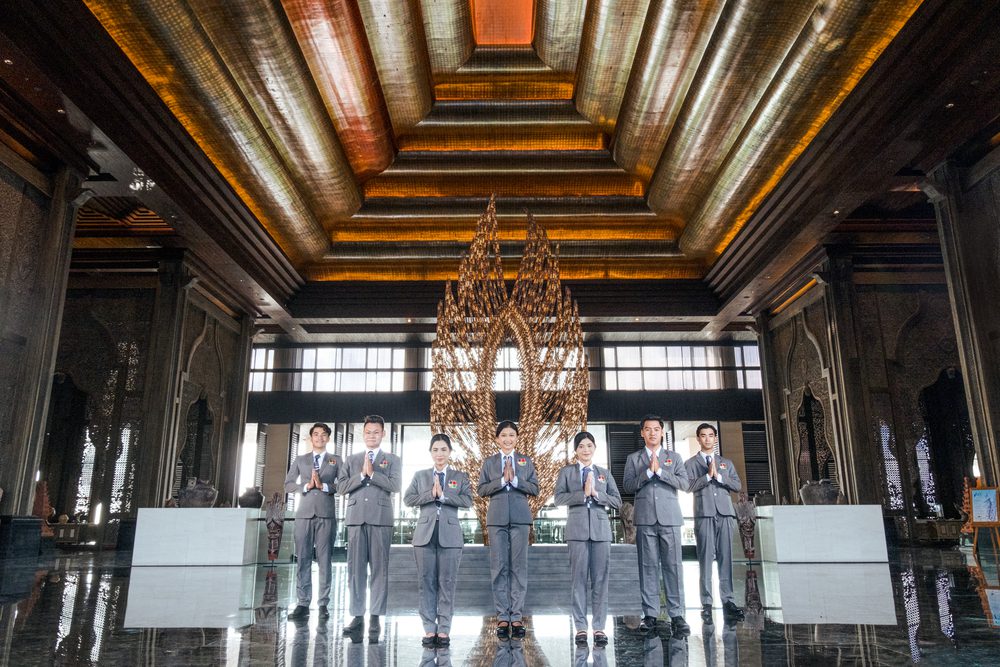
In designing its vocational education, PIB College starts from the understanding that strong practical training must go hand in hand with a living industry context. The learning process is structured so that students are not only trained technically, but are also gradually accustomed to professional standards, operational rhythms, and workplace expectations from the early stages of their studies. Learning is not positioned as a detached simulation, but as a structured process that progressively approaches real working conditions.
The learning environment at PIB is designed to support this approach. Bali’s role as a center for hospitality, culinary, and service-based industries provides a learning context that is highly relevant to current industry needs. This context is not treated merely as a backdrop, but as an integral part of the learning experience, helping students understand how theory, practice, and industry dynamics are interconnected within a single educational ecosystem.
This approach aims to support a more mature transition from education to professional life. Students graduate not only with technical skills, but also with an understanding of professional standards, work ethics, and the ability to adapt in an ever-changing environment. For parents, this provides reassurance that the educational process does not end at graduation, but genuinely prepares students to enter the next phase of life with confidence and readiness.
Ultimately, hospitality, culinary, and digital business education can no longer be separated from industry and its context. This is not driven by trends, but by the reality that the modern workforce demands a more comprehensive level of preparedness. PIB College adopts this approach as part of its commitment to delivering vocational education that is relevant, responsible, and focused on preparing students for the real professional world.
Author: Stephanie Gunawan